
If you are wondering how to keep mosquitoes out of a pond, the short answer is simple. Mosquitoes only thrive where water is still, dirty, and unmanaged. A healthy pond with proper circulation, balance, and maintenance works against them instead of helping them.
This matters even more in warm, humid areas like Central Florida, where mosquito breeding cycles move fast. Eggs can turn into biting adults in about a week. The goal is to break that cycle early, before mosquitoes ever leave the water.
Below is a clear, practical approach that actually works and does not rely on gimmicks.
Why Mosquitoes Choose Ponds in the First Place
Mosquitoes do not care that your pond looks beautiful. They care about conditions.
They need:
- Still or slow-moving water
- Warm temperatures
- Organic debris and algae
- Shallow, protected edges
An unmaintained pond checks every box. A maintained pond does the opposite.
Once you understand this, mosquito control becomes predictable and manageable.
1. Keep the Water Moving at All Times
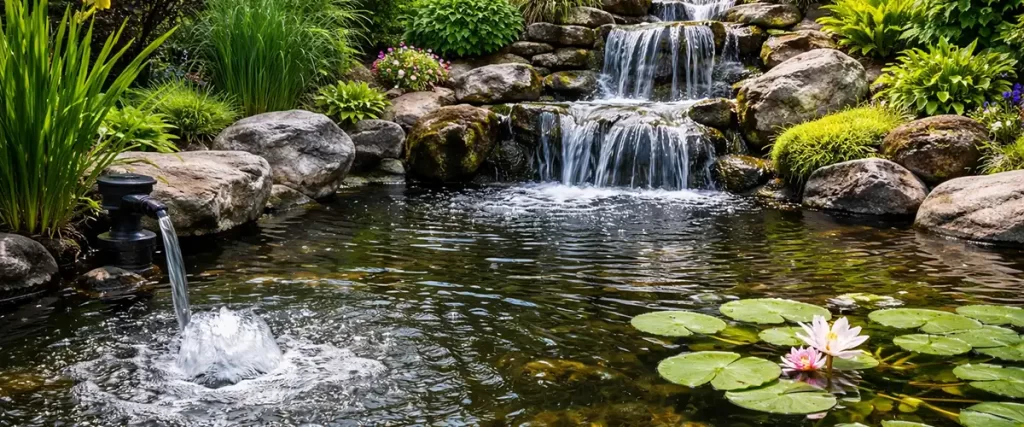
The fastest solution to prevent Mosquitoes is water movement.
Mosquitoes avoid laying eggs in moving water. Even light circulation disrupts their breeding process. So get the water moving.
Every pond should have consistent circulation throughout the entire water surface. This starts with a properly sized pump that runs continuously, not just during part of the day.
Adding a waterfall, fountain, or bubbler helps break the surface and eliminates still areas.
It is also important to check for dead zones where water does not move at all. If the surface looks like glass, mosquitoes see opportunity.
In Central Florida, this step alone often reduces mosquito activity dramatically within days.
2. Add Fish That Eat Mosquito Larvae
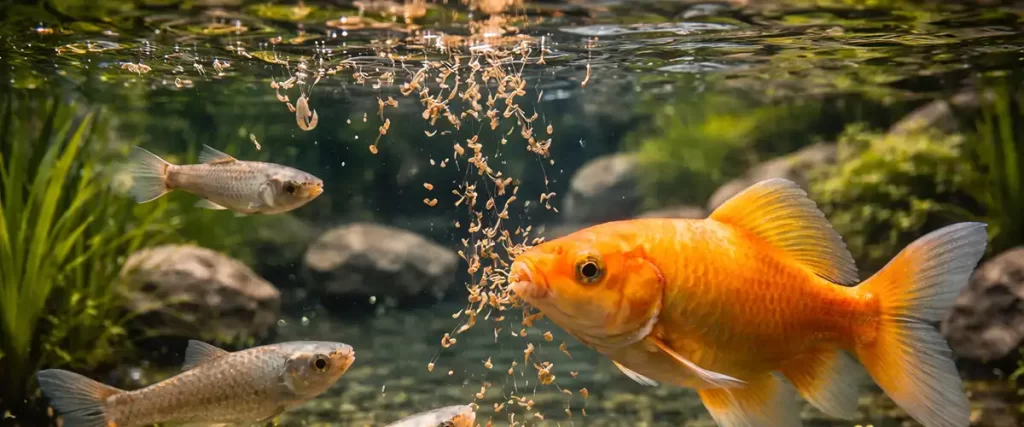
Nature already solved this problem. Fish consume mosquito larvae before they ever develop wings.
Best fish for mosquito control:
- Mosquitofish (effective but should be used carefully depending on local regulations)
- Goldfish and koi for ornamental ponds
- Minnows or guppies for smaller water features
Fish do not need to rely on larvae as their main food source. Even occasional feeding is enough to disrupt mosquito breeding.
Avoid overstocking. Too many fish create nutrient overload, which leads to algae and new problems.
3. Keep the Pond Clean and Balanced
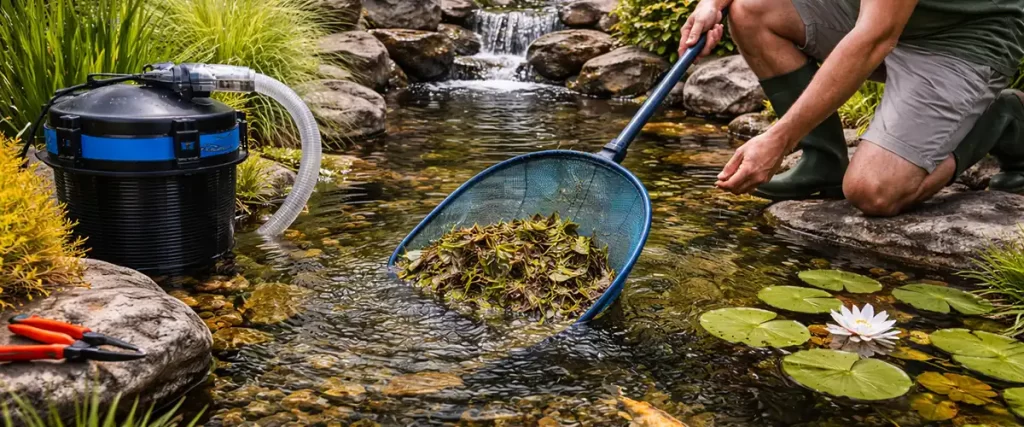
Mosquito larvae feed on microscopic organisms that thrive in dirty water.
If your pond is full of sludge, leaves, and algae, you are feeding mosquitoes.
Pond maintenance that makes a real difference includes:
- Remove fallen leaves and debris weekly
- Vacuum sludge from the bottom as needed
- Clean skimmers and pump filters regularly
- Use beneficial bacteria to break down organic waste
Clear water is not just about looks. It is about eliminating mosquito food sources.
If you would rather not handle this yourself, a professional pond cleaning service can take care of it for you.
4. Control Plant Growth Around the Pond
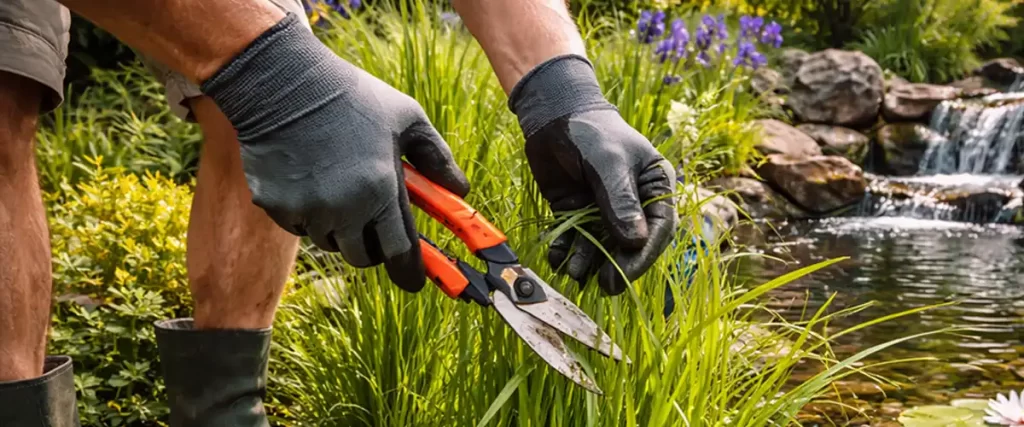
Plants are important, but overgrowth creates shelter for larvae and blocks circulation.
Control plant growth around the pond before it becomes a problem, especially near the edges where water movement is limited.
Smart plant management:
- Trim pond plants before they crowd the surface
- Thin floating plants so they do not cover more than half the pond
- Keep edges open, so fish and water movement can reach shallow areas
- Remove dead plant material before it sinks and breaks down
Dense plant mats near the edge are one of the most common mosquito nesting zones.
5. Use Pond-Safe Larval Treatments When Needed
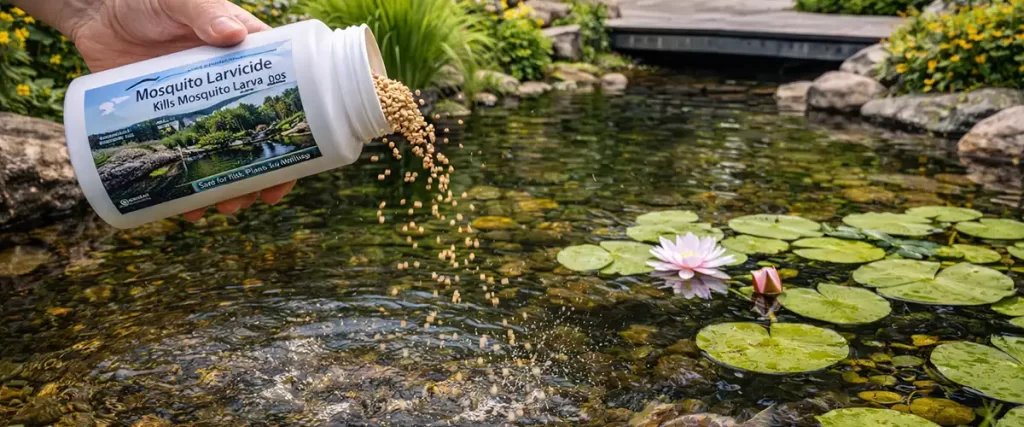
Sometimes maintenance and circulation are not enough on their own, especially during peak mosquito season. This is where targeted biological control helps.
Products containing Bacillus thuringiensis israelensis (BTI) are highly effective for controlling mosquito larvae without harming the pond ecosystem.
These treatments are commonly sold as mosquito dunks or granules and are widely used. They work by targeting mosquito larvae only, while remaining safe for fish, pets, birds, and people.
A single application typically remains effective for several weeks, making it a practical backup option when mosquito pressure increases.
Avoid chemical insecticides in or around the pond. They cause long-term damage to water quality, harm beneficial organisms, and often create bigger problems over time.
Pond Design Details That Reduce Mosquito Risk
A properly designed and built pond plays a bigger role than most people realize. Shallow water warms quickly and attracts egg-laying mosquitoes.
Better pond design choices:
- Depth over 24 inches where possible
- Steeper edges instead of wide, shallow shelves
- Fewer isolated pockets of still water
You do not need to rebuild your pond, but small design adjustments during upgrades can reduce mosquito pressure long term.
What Not to Do If You Have a Mosquito Problem
Some popular advice causes more harm than good.
- Do not pour vinegar, bleach, or oils into the pond
- Do not drain the pond as a primary solution
- Do not rely on scented plants alone
These approaches either damage the ecosystem or provide little real protection.
How to Tell If Your Pond Is Causing Mosquito Problems
Watch the water closely. The signs include:
- Tiny wiggling larvae near the surface
- Increased mosquito activity near the pond at dusk
- Algae buildup and stagnant areas
If you see larvae, act immediately. Waiting even a few days allows a new generation to emerge.
A Mosquito-Free Backyard Starts With a Healthy Pond
Learning how to keep mosquitoes out of pond comes down to one principle. A healthy pond works against mosquitoes.
Keep the water moving. Keep it clean. Support natural predators. Use pond-safe treatments when needed.
In places like Central Florida, staying ahead of mosquito season is critical. A little consistent maintenance prevents a lot of frustration later.
A pond should add life to your yard, not drive you indoors. When it is maintained properly, mosquitoes lose their advantage, and your outdoor space becomes enjoyable again.
If maintaining your pond feels overwhelming or time-consuming, professional pond maintenance can help keep everything balanced year-round.
Site Pros Landscaping provides pond maintenance services designed to improve water quality, circulation, and overall pond health, so mosquito problems are addressed before they start.
Call (407) 480-0713 or contact us to schedule professional pond maintenance with Site Pros and keep your pond healthy year-round.